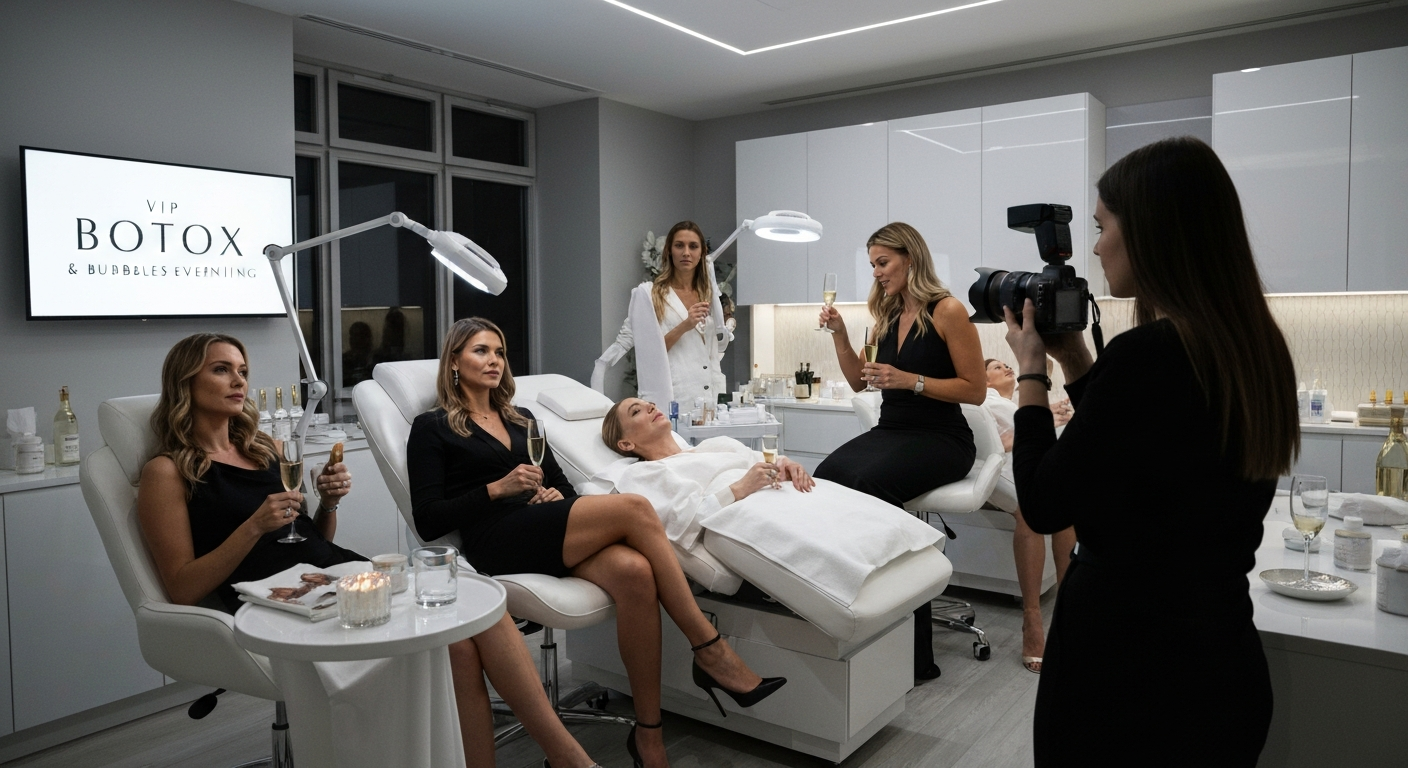
15 Unorthodox Marketing Strategies for Medical and Aesthetic Practices
Most practices compete on the same three moves — Google Ads, Instagram posts, and word of mouth. Here's what the practices quietly outpacing them are doing instead.
Free Download
15 Unorthodox Marketing Strategies
The full playbook for medical and aesthetic practices — sent straight to your inbox.
The practices that grow fastest in competitive markets aren't just outspending their neighbors on ads. They're building systems, relationships, and experiences that make patients feel seen — and that turn one visit into a lifetime of bookings.
This article introduces the framework. The full playbook — all 15 strategies, with implementation steps — is available as a free download at the bottom.
Why Standard Marketing Stops Working
Google Ads and Instagram reach work — until everyone in your market is doing them. When every aesthetic practice in your zip code is running the same "50% off Botox" promotion to the same audience, the only differentiator left is price. That's a race no premium practice should be running.
Unorthodox strategies create a different kind of advantage. They compound over time, they're harder to replicate, and they attract patients who value experience over discount. Below are five of the fifteen strategies from the full playbook.
Strategy #1: The Inner Circle Referral Engine
Your most loyal patients already talk about you. The question is whether you're giving them the right tools and the right reason to do it more deliberately. Build a private "Inner Circle" — a small group of your highest-lifetime-value patients — and give them something genuinely exclusive: early access to new services, a named treatment package, or a standing VIP booking slot. When people feel like insiders, they recruit other insiders. Word-of-mouth becomes a structured channel, not a happy accident.
Strategy #2: The Local Authority Flywheel
Most practices use social media to sell. The practices that dominate local markets use it to educate. A monthly educational video — "What actually happens to your skin after 40," "Three things that accelerate bruising after filler" — positions your provider as the most knowledgeable clinician in the area. Patients choose who they trust, not who advertises hardest. Trust is built through consistent, genuinely useful content that demonstrates expertise before the patient ever books.
Strategy #3: The Post-Treatment Reactivation Window
The highest-probability moment to book a patient's next appointment is not six weeks after their last visit. It's 48 to 72 hours after, when results are visible and they are at their most satisfied. A simple automated check-in at this exact window — asking how they're feeling, sharing a care tip specific to their treatment — creates the natural opening for a "ready to schedule your maintenance appointment?" follow-up. Most practices miss this window entirely because it requires precise timing and a personal tone that manual outreach cannot consistently deliver.
Strategy #4: The Partner Practice Ecosystem
Identify five to eight non-competing businesses that serve the same patient profile — high-end fitness studios, nutritionists, dermatologists, hair salons, and wellness practitioners. Build a formal mutual referral arrangement: a co-branded experience, a shared loyalty benefit, or a joint event. Your ideal patient already spends money in these adjacent spaces. You're simply making it easier for them to find you through channels their existing trust already extends to.
Strategy #5: The Lead Magnet Funnel
Eighty percent of the people who visit your website are in research mode, not booking mode. A high-value lead magnet — a downloadable guide, a skin quiz, a treatment comparison tool — gives them a reason to leave their contact information before they leave your site. That contact becomes a warm, nurtureable prospect in your database. Over a 60-day automated sequence, a meaningful percentage of those researchers become booked patients. Without the lead magnet, they simply vanish.
The Common Thread
Every one of these strategies works through the same mechanism: building a system that captures patient attention, warms it over time, and converts it into a booking — without requiring your front desk to do the heavy lifting manually.
Where SpaFlow Fits In
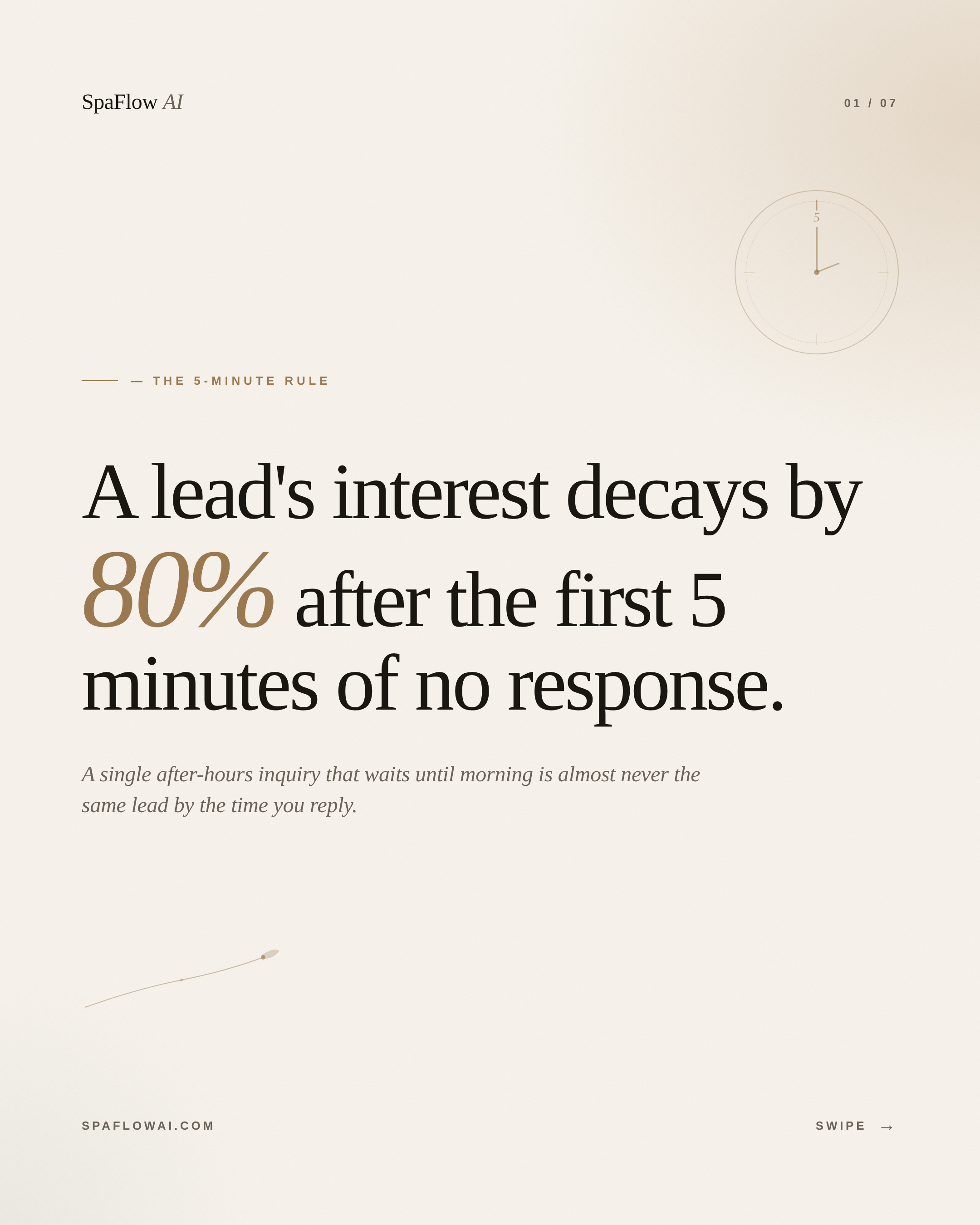
Most of these strategies fail not because the idea is wrong, but because execution requires consistent follow-up, precise timing, and a personal tone that manual systems cannot sustain. SpaFlow handles the capture, the nurture, the re-engagement, and the reactivation sequences that make these strategies work at scale — without adding headcount.
When a patient downloads your lead magnet, SpaFlow fires the nurture sequence. When a post-treatment check-in is due, it sends it automatically in your practice's voice. When a patient goes six weeks without rebooking, it reaches out with exactly the right message at exactly the right time.
Want All 15 Strategies?
Download the complete playbook — 15 Unorthodox Marketing Strategies for Medical and Aesthetic Practices — and get the full implementation steps for each one, free.
The Bigger Shift
The practices that grow predictably in today's market aren't the ones with the biggest ad budgets. They're the ones that have closed the gap between marketing and booking. Every inquiry that comes in gets a response. Every potential patient who expresses interest gets nurtured. Every past patient gets re-engaged at the right moment.
That gap — the space between "interested" and "booked" — is where most practices leak their growth. Unorthodox marketing fills the top. Intelligent automation converts the middle. Together, they build a practice that grows without requiring the owner to be the bottleneck.
See Where Your Practice Is Leaking
Get a free Revenue Leak Assessment and find out exactly how much revenue your current setup is leaving on the table — with a real dollar figure attached to each gap.
Get a Free Revenue Leak Assessment